Success in Church Times competition

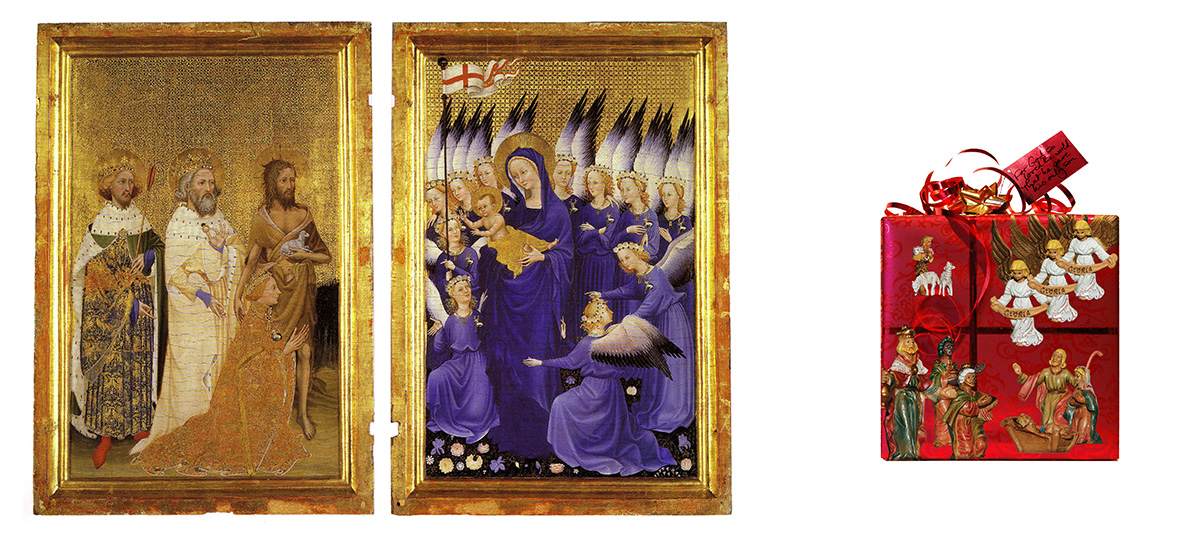
Prize-winning poster from Station 8 of 'The Passion' series


Today, Maundy Thursday, is the day in the Christian calendar which prepares for its biggest celebration at Easter. The story of the passion, Jesus’ final hours culminating in his death and resurrection, is one that I re-told in my series The Passion – 12 stations originally produced for exhibition in Bristol Cathedral in 2006. This series has since been shown elsewhere in Bristol, and today, a version of Station 8 (above) has been published in the Church Times as one of the 5 winners of an Easter poster competition. The competition encouraged thought-provoking responses, in keeping with style of ChurchAds, with whom the competition was run. Visit the Church Times site to see the comments and the other winners, one of which includes my friend Ralph Mann.

It’s been encouraging for me to revisit my series, and to dig around in the symbolism and moments of encounter that each station include. It’s also a timely connection to the end of Lent and the approaching end of Holy Week. In a booklet which accompanied the exhibition, I wrote the following article about the work, entitled ‘Why replay the Bible story of Christ’s last hours in art?’

‘Critics today have noted a turn in art since the ’90s towards the iconographic (Brandon Taylor, The Art of Today, 1995), a shift that asks for a more knowing and cognitive response from the viewer in terms of the language being used. The term icon has been broken down and labelled by theorists wanting to explain how pictures exert influence over us, and the place for an experience of art becomes increasingly subject to coding and psychological analysis.

‘But experiences of art were once closely aligned with experiences of God in Western culture, at a time when the iconographic language of pictures was also incredibly rich. Painting began to plumb new depths during the Renaissance when, in the context of art made to represent Christ for the faithful, it invited a greater immediacy for relationship:

Paintings proved capable of representing Christ’s body more richly and resonantly than relics. They could show it whole and eloquent, in the course of its redemptive work. They could also show human beings like ourselves contemplating the actions and traces which God and the saints have made in the world’s fabric, and so draw us into their contemplation by example. … As a result, they are not prey to the disenchantment which has overtaken relics and so much of the furniture of religion in the modern world. … Religion lives more richly from such creative use of its resources. And in the enlivening process a little of what it had once held in exclusive control is consumed into a wider humanity.

(from John Drury, Painting the Word, 2002)

‘In these images, I am trying to remember what was both a knowledge-based understanding of the subject-matter, and a sensory engagement with the design (in terms of spiritual journey or encounter). In this particular balance there are new possibilities for a relationship between art and the church that recognises the legacy of such work – a legacy that encourages a very human telling of the Christian story, and goes some way towards breaking down the institutionalization that encroaches upon it.

‘This ‘human telling’ is specifically conceived of as multi-dimensional: a story has visual qualities that do not remain captive to or do not always need obvious photographic, literal interpretation: metaphors, prose, symbolic meaning all provide meditative stopping points. With my Stations, these open up points of stillness or departure or expansion for the viewer. The scenes are multi-layered, with many character interplays, emotional and spiritual exchanges, political and biblical symbols.

‘And like silver threads running through all the dark tangles are also God’s themes: his relationship with his son, his handing over Jesus to the authorities (whose power he also holds), his abandonment of Jesus, his ultimate plan of redemption for humanity. The cross’ shadow is so big and so long over history, it is sometimes easy to forget its minutiae. One needs to recognise in it the universality of human telling in recounting its uniquely historical story, and also to regain the hand of God in its iconography.’

Happy Easter.

Hockney reviewed in 100 words

Hockney film still, Woldgate Woods


My opinion of Hockney’s work was polarized by this exhibition. The garish painting, the ipad drawings and the canvas-stacking overload of much of this show had gone day-glo, a little overblown. The film and the photographic collages, however, were like fresh air breathing through so much stuck paint. Space and time were lifted, expanded, filled and dancing because of framing that thwarted the one-eyed camera view. Turning seasons and waving tree-tops give you the bigger picture, the one where sight is corporeal and turns you inside out. Enveloped, interconnected, loved. Hockney’s research into looking with technology is fusing this work.

Sneak preview of new work ‘Cloud’

Work can be so confusing. I can spend hours trying to pin down, pull out, work through, and emerge frustrated from one particular focus, only to find that another piece resolves itself in the space of a couple of minutes when I wasn’t even looking. This piece was originally a greyed-out dud of a firework photo, but a sequence of Photoshop steps, including flipping, rotating, levelling and blending seemed to pull something ‘other’ out of the bag. Like it wasn’t even me.

It’s called Cloud because it’s one of 4 square pieces about each of the elements – forthcoming show for those who’ve noticed. This is air in the biblical sense of God’s presence – a transfiguring, divine presence, where mountaintop cloud has something of the celestial and the explosive about it. The ‘not seeing’ in a cloud can paradoxically be about revelation: fullness of space is about fullness of reality. I like that.

I’m also trying to link each of these pieces with T. S. Eliot’s ‘Four Quartets’ – they are based on the elements. This is hard going, as Eliot in places is. Watch this space…

Found after high tide today!


No time to reflect today, but my photography attempt out this morning to catch the high tide of the year was thwarted. Found a piece of driftwood instead. Happy.

Manifesto for the arts

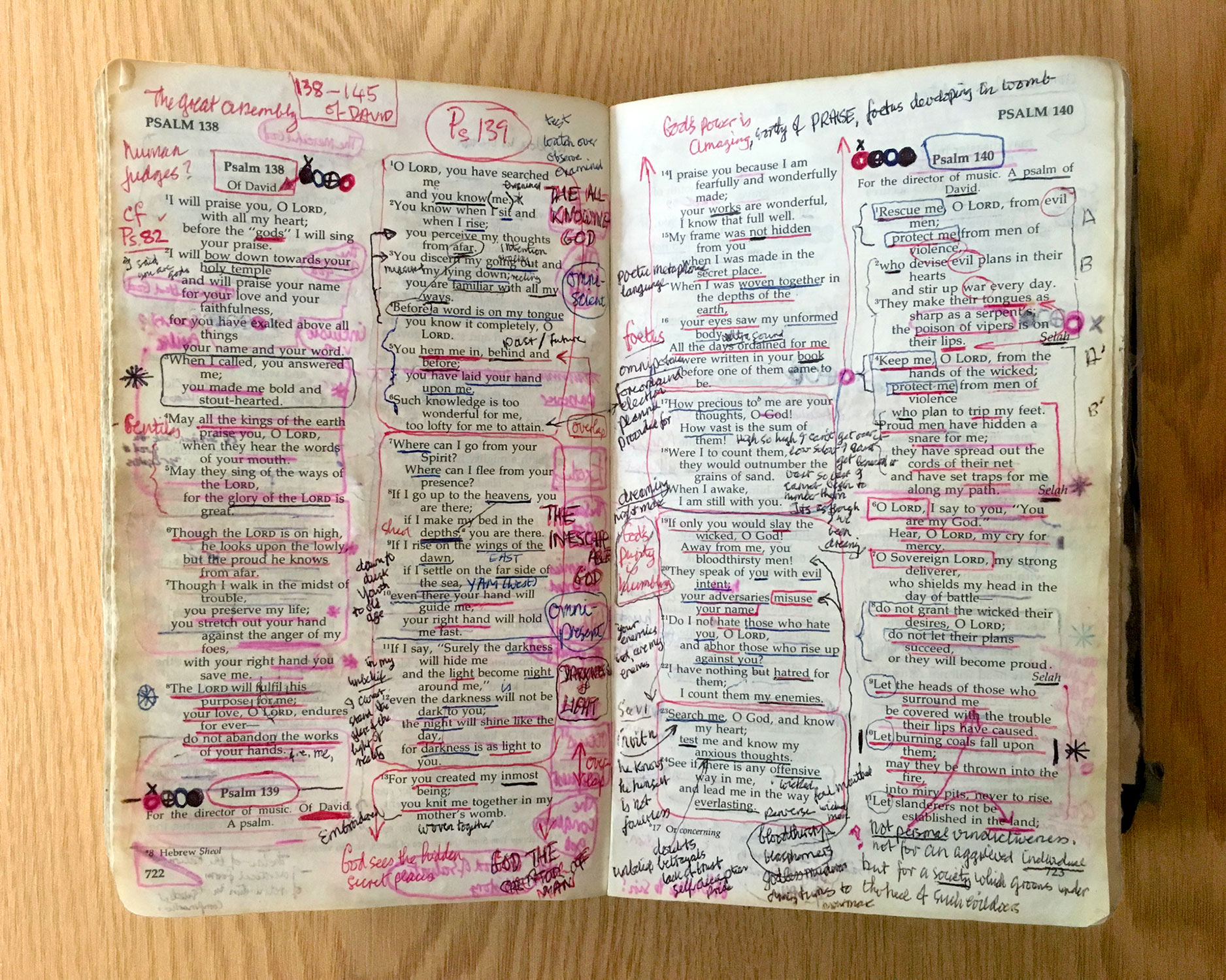
My summary points from a talk given to the spouses of vicars-in-training earlier this week:

  • Art is not just decoration for the more serious business of the Word – background visual element to church life. Art is part of the Word. Incarnational, material. Christ is the image of God, holding everything that is created together. (Colossians 1:15-17).
  • Art is not visual propaganda for mission. Too much naff, and poor quality work from Christian artists which, in assuming that representation in art works like language, ignores the whole of the twentieth century history of art: abstraction, conceptual, nuanced, allusive.
  • Art is the explosive stuff that churches often say ‘shouldn’t the money have been better spent on the chairs?’ (cf. disciples and perfume). God wanted the temple to be Decked Out (Haggai 1). Bring intelligence to a celebration of imagery in the Bible, not suspicion of idolatrous power.
  • Art is the cultural expression of our society’s worldview. Galleries are described by the media as ‘today’s cathedrals’, Hockney and Hirst both have angles on theology, so do Eastenders and Emmerdale. We ignore these undercurrents at our peril!

I want to say yes to the wider application of artistic practice – everyone has creative talent.
This understanding makes art person-centred, and deeply reflective of creative ways of thinking, which is God-given. BUT, yes also to narrower application for artists with specific gifts. Art as a profession – Bezalel example. Cultural commentators who produce work for others – artists need appreciators!

Os Guinness in Fit Bodies Fat Minds:
Christian artists are ‘the least understood and most alienated single group of people in evangelical churches’.